
















Qatar’s manufacturing sector enters 2026 on a strong footing, supported by record output in 2025, a growing factory base, and a national strategy aimed at deepening industrial diversification and private sector participation. For small and medium-sized enterprises (SMEs), the trajectory signals tangible opportunities across supply chains, export-oriented production, and industrial services.
Record industrial output in 2025
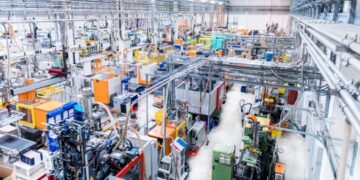
Official and industry data show that manufacturing contributed approximately QAR 69 billion to Qatar’s economy in 2025, marking the sector’s highest recorded level to date. The number of operational factories exceeded 1,000, up from fewer than 950 earlier in the decade, reflecting sustained investment in domestic production capacity.
These figures have been reported consistently across local and regional business coverage and are grounded in data released by the Ministry of Commerce and Industry (MoCI), which oversees industrial licensing and sector development. The growth has been driven by increased output in food processing, building materials, chemicals, and light manufacturing, alongside stronger demand for locally produced goods.
Manufacturing’s role in non-hydrocarbon growth
Manufacturing is increasingly central to Qatar’s non-hydrocarbon economy. According to MoCI data cited by the Qatar News Agency, the sector generated QAR 26.84 billion in GDP contribution during the first half of 2025 alone, underscoring its scale and momentum.
This performance aligns with macroeconomic forecasts for 2026. Economic outlooks referenced by national planners and regional financial institutions indicate that Qatar’s GDP growth is expected to reach around 3.2 percent in 2026, with non-hydrocarbon sectors, including manufacturing, providing a significant share of that expansion. The forecast reflects a post-energy-cycle rebalancing rather than a temporary uplift, reinforcing the sector’s structural importance.
National Manufacturing Strategy 2024-2030
Policy direction is anchored in the Qatar National Manufacturing Strategy 2024-2030, formally launched by the Ministry of Commerce and Industry as part of Qatar National Vision 2030 and the Third National Development Strategy.
The strategy does not position manufacturing growth as volume-led alone. Instead, it prioritises:
- Higher value-added production, with a stronger role for advanced and specialised manufacturing
- Greater private sector participation, targeting a substantial increase in private value added by the end of the decade
- Industrial diversification, with a stated objective of expanding the range of manufacturing activities by around 50 percent
- Steady industrial investment, supported through incentives, land allocation, and financing mechanisms
While public summaries of the strategy emphasise directional targets rather than fixed output figures, official statements confirm that the objective is to push manufacturing output beyond current levels through productivity, localisation, and export readiness rather than capacity expansion alone.
What this means for SMEs
For SMEs operating in, or adjacent to, the industrial sector, the current phase of growth creates several practical entry points.
Supply chain localisation: As large manufacturers expand, demand is rising for local suppliers of components, packaging, logistics, maintenance, quality assurance, and digital systems. SMEs positioned as reliable industrial service providers stand to benefit directly.
Export-linked production: Government policy increasingly links industrial incentives to export potential. SMEs capable of meeting regional standards in food products, construction materials, and intermediate goods are better placed to access Gulf and nearby markets.
Industrial services and technology: The strategy places emphasis on smart manufacturing, efficiency, and sustainability. This creates space for SMEs offering automation support, industrial software, energy efficiency solutions, and compliance services.
Structured opportunity programmes: Initiatives such as the “1,000 Opportunities” programme, led by MoCI in partnership with national institutions, are designed to connect investors and entrepreneurs with bankable industrial projects, lowering entry barriers for smaller firms.
Constraints to navigate
Despite the positive outlook, structural challenges remain. SMEs continue to face pressure from imported input costs, skills availability in specialised manufacturing roles, and the need to meet export-quality benchmarks. Access to finance, while improving, remains selective for early-stage industrial ventures.
Policy responses increasingly focus on these gaps, but SME success in 2026 will depend on operational discipline, integration into anchor supply chains, and the ability to scale incrementally rather than rapidly.
Outlook for 2026
Entering 2026, Qatar’s manufacturing sector is no longer framed as a supporting industry but as a core pillar of non-hydrocarbon growth. With stable policy backing, rising domestic demand, and clearer export pathways, the sector’s expansion is expected to continue at a measured pace.
For SMEs, the opportunity lies less in headline output figures and more in where growth is being directed: higher value activities, localised supply chains, and industrial services that support a more competitive manufacturing base. Those aligned with this direction are likely to find 2026 a more accessible and structured environment for industrial participation than in previous cycles.
Enjoyed this article? Dive deeper into Qatar’s insights with our Business News, Qatar Guide and Resources. Stay connected, follow us on LinkedIn h X @QatarsTalk for real-time updates, or subscribe to our newsletter for exclusive content. Share your thoughts in the comments below!